

Most property managers don’t lose bookings to bad marketing. They lose them to thin distribution and listings guests stop reading after two lines. A vacation rental marketing plan in 2026 has to cover the three places guests now decide: booking channels, Google, and AI assistants. Here’s how to build one that fills calendars without adding hours to your week.
TL;DR
- A vacation rental marketing plan decides where your properties appear, how each listing converts, and which bookings you own.
- Distribution comes first. More relevant channels mean more chances to be found before you spend anything on promotion.
- Listing content and reviews decide conversion on every channel, so fix them before buying traffic.
- Google Vacation Rentals and AI travel assistants are now part of the search journey, which makes consistent property data across channels essential.
- Direct bookings, email lists, and repeat guests are the only demand you fully own.
- Dynamic pricing and targeted OTA promotions protect occupancy in low season.
- For small portfolios, social media is the lowest-return time investment in the plan.
What should a vacation rental marketing plan include?
A vacation rental marketing plan is a prioritized set of actions that decides where your properties are listed, how each listing converts, and how one-time guests become direct, repeat bookings. It covers five areas: distribution, listing content, search visibility, direct bookings, and pricing. If you take away one thing from this guide, it should be this: find channels that fit your rentals and target audience, and get listed on as many as you can.
Relying on a channel manager for vacation rentals will help you rank high on big OTAs like Airbnb, Booking.com, Vrbo, Expedia, HometoGoTrip.com, and Agoda requires optimizing your content and gathering many positive reviews, which takes time.
Alternative vacation rental channels have less competition – which means it’s easier to rank highly. Plus, they often target a specific type of traveller who’s looking for a rental with specific characteristics.
But even if you’re committed to optimizing your listings, it may take time to start ranking high on the big OTAs. In the meantime, it’s a good idea to start listing your properties on alternative vacation rental sites.
Start with distribution before promotion
Channel mix is the foundation of any short-term rental marketing strategy. Relying on one or two OTAs exposes you to algorithm changes, commission increases, and account suspensions you can’t control. Every relevant channel you add is another shelf your property sits on. In this case relevance matters more than volume.
Vacation rental metasearch engines are websites that aggregate listings from thousands of different booking sites, making it easy to compare prices and find the best deals.
Metasearch engines like Google, HomeToGo, and Holidu (Europe) are very popular among Dutch, German and Europe travellers, highlighting budget-friendly rentals, with features like flexible cancellation options.
Besides offering budget-friendly rentals, metasearch engines use the same tactics to attract travellers that OTAs do, like providing flexible cancellation options. This means that property managers have the opportunity to optimise their listings and, as a result, increase their conversions.
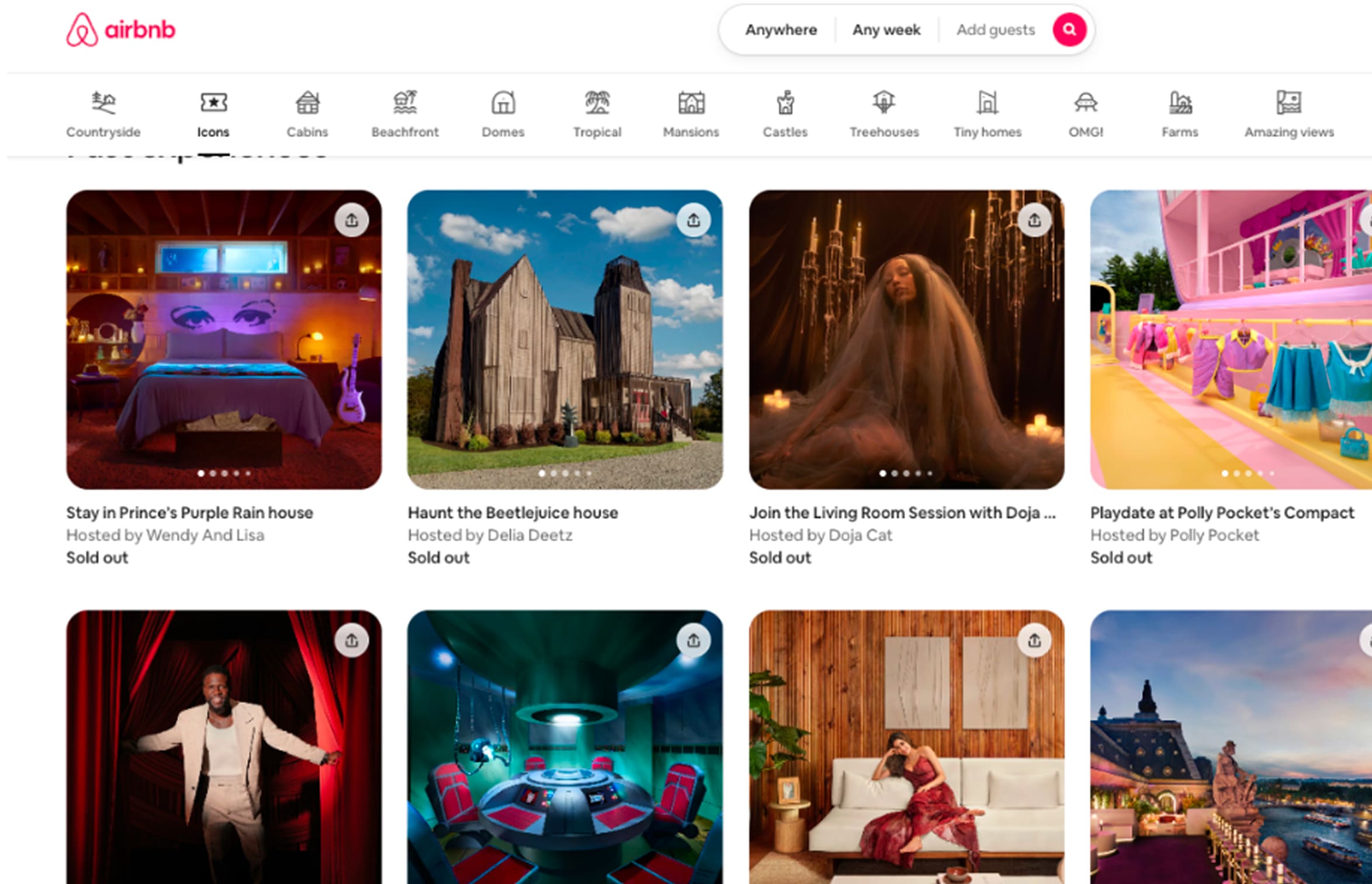
Niche and specialist sites target a narrower guest: glamping, luxury villas, pet-friendly stays, or mid-term rentals. That audience arrives pre-qualified, so it often converts better. Regional marketplaces carry local trust in drive-to destinations, and B2B wholesalers reach travel agents and tour operators who rarely browse Airbnb.
Here’s the thing: managing ten channels by hand is how double bookings happen at 2 AM. Rentals United connects property managers to 90+ OTAs, metasearch engines, specialist sites, and wholesalers, plugging into 60+ PMS platforms through direct, two-way API connections. Rates, availability, and content stay in sync while your PMS remains your system of record.
Fix your listing content before you pay for traffic
Listing content decides conversion on every channel. Traffic sent to a weak listing is money spent twice, once on reach and again on the booking you lost.
Photos come first. The lead image decides whether a guest clicks, so shoot every room in natural light, from several angles, and include the exterior and the view. A professional shoot is a one-time cost that pays back across every channel.
Descriptions should match the guest you want. A remote worker scans for desk space and Wi-Fi speed, while a family looks for bedrooms, cots, and outdoor space. Put the deciding amenity in the first two lines and adjust the angle by channel, since a mid-term stay site and a luxury villa site attract different readers.
Reviews close the loop. Automate review requests in your PMS after checkout, reply to every review, including the critical ones, and feature the best on your website. Steady 5-star reviews support OTA ranking and give AI assistants concrete material to quote.
Pro tip: Once a quarter, compare your top three listings side by side on every channel. Mismatched amenities, outdated photos, or different house rules confuse guests and the algorithms that rank you.
Get found on Google and in AI answers
Guests no longer start every search on an OTA. Google shows vacation rentals alongside hotels in Search and Maps, and AI assistants have become a planning step of their own. According to Allianz Partners’ Global Travel Confidence Index, 37% of Americans planning summer 2026 travel were using AI to help plan their trips (Ipsos poll of 2,001 US adults, March to April 2026).
Google is the quickest win of the two. Through Rentals United, Google Vacation Rentals listings are currently free and commission-free, sync availability, pricing, and property info automatically, and can send traffic straight to your own booking website.
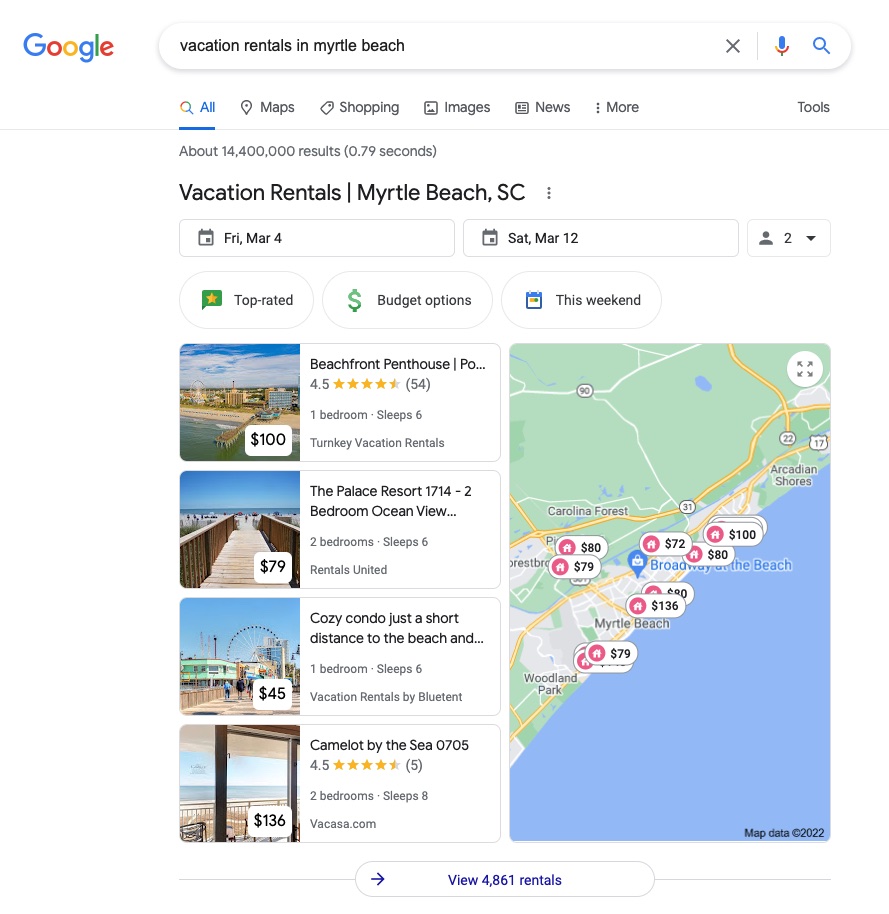
Onboarding typically takes between two days and a week, subject to a minimum content quality check. AI answers are harder to influence directly. These tools summarize what they can read: consistent property details across channels, review content, and clear website pages that name your location, property types, and amenities. Treat every listing as structured data, because that’s how machines read it now.
Build direct bookings you actually own
Direct bookings are the only demand you fully control. There’s no commission, no ranking algorithm, and the guest relationship stays with you.
Your direct booking website needs a page per property, full photo galleries, an integrated booking engine, and a mobile-first layout. Feed it with local content that answers what guests search before they book, such as the best beaches nearby or where to park in the old town. Backlinks from tourism boards, local press, and partner businesses tell Google the site is credible.
Email is the owned channel most operators underuse. Collect addresses from past guests with their consent, send seasonal offers and early-booking windows, and invite repeat guests to book direct next time. Partnerships with local restaurants, activity providers, and transport services add package value without cutting your nightly rate.
Price and promote with intent
Pricing is marketing. Guests compare it right after photos, and a rate that’s out of line with the market kills conversion faster than any weak description.
Dynamic pricing tools adjust rates for seasonality, local events, and lead time, which manual updates can’t match across a portfolio. OTA promotions, length-of-stay discounts, and multi-rate plans fill low-season gaps and last-minute nights without permanently lowering your base rate.
Keep promotions targeted. Blanket discounts across every channel train guests to wait for deals.
Where social media and PR fit
Here’s our position: for portfolios under 50 units, social media is the lowest-return hour in your marketing plan. Guests scrolling Instagram are rarely in booking mode, while guests on OTAs, Google, and AI assistants are searching for specific dates. Put social time into listing content and channel mix first, then use social to support repeat guests and direct bookings.
PR pays off more than most operators expect. Local and trade journalists look for stories about domestic tourism, sustainable stays, and hospitality businesses growing in their region. One earned article can bring backlinks, trust, and bookings for years.
How to prioritize your vacation rental marketing plan
Not every tactic deserves your time this quarter. Sequence matters more than volume, so start with what affects every booking and add what compounds over time.
Picture a property manager running 15 units in the Algarve, listed only on Airbnb and Booking.com. Adding metasearch and two specialist channels in month one would do more for occupancy than any social campaign. Once calendars fill, the next move is a direct booking site and an email list built from those new guests.
| Tactic | Effort | Time to impact | Best for |
|---|---|---|---|
| Channel mix and distribution | Medium | Weeks | Every portfolio |
| Listing content and reviews | Medium | Weeks | Every portfolio |
| Google Vacation Rentals | Low | Days to weeks | Operators wanting commission-free visibility |
| Direct booking website and SEO | High | 6 to 12 months | Growing and mid-size portfolios |
| Email and repeat guests | Low | Months | Portfolios with past-guest data |
| Dynamic pricing and promotions | Medium | Weeks | Seasonal markets |
| Social media and PR | Medium to high | Months | Brands with a strong local story |
Get distribution and listing content right first, because they touch every booking. Then build the assets you own. A plan that follows this order compounds over time, while one that starts with social posts rarely does.
Frequently asked questions
What is a vacation rental marketing plan?
A vacation rental marketing plan is a prioritized set of actions covering distribution, listing content, search visibility, direct bookings, and pricing. Its purpose is to increase bookings while reducing dependence on any single channel.
How can I market my vacation rental for free?
List on Google Vacation Rentals, which is currently free through connected partners, and improve your listing photos and descriptions. Request a review after every stay, publish local guides on your website, and email past guests who agreed to hear from you.
How many booking channels should a vacation rental be listed on?
There’s no fixed number. Combine one or two major OTAs with metasearch and a few niche or local channels that match your property type and target guests. A channel manager keeps rates and availability in sync as you add more.
How do AI travel assistants affect vacation rental marketing?
More guests now use AI tools to research destinations and stays. These tools summarize the information they can access, so consistent property data, strong reviews, and clear website content give them accurate material to work with.
Is social media worth it for vacation rentals?
For small portfolios, social media usually returns less than channel mix and listing content. It works best as support for repeat guests, direct bookings, and properties with a strong visual or local story.
You can connect via a trusted channel manager like Rentals United and have access to a free ans easy to use website builder, to start gaining direct bookings while you connect to other major channels.
By connecting to Google via a channel manager like Rentals United, you can advertise your listings for free, with no commission fees.